Monday, 27 March 2017

Double Page Spread Photo Planning Sheet

Double Page Spread Photo Planning Sheet

I am going to use the same models that I used on my front cover on my double page spread, but I will take the photo in a long shot, and use a different background, rather than a studio shot.

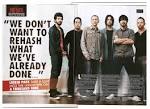
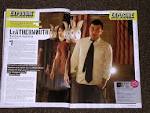
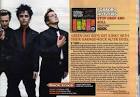
Image result for music magazine double page spread bandImage result for music magazine double page spread bandImage result for music magazine double page spread bandImage result for music magazine double page spread band

Front Cover Photo Planning Sheet

Front Cover Photo Planning Sheet

I am going to use:

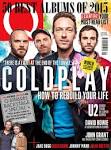
Image result for music magazine front cover band  Image result for music magazine front cover bandImage result for music magazine front cover bandImage result for music magazine front cover band
  • 2 models, in dark clothing.
  • Lights and umbrellas to make sure the picture is well lit
  • The studio behind the stage
To follow the conventions of music magazine front covers, I will take the picture in a mid-shot. 

Problems with Photos

Problems with Photos

My Photos for my rough cut aren't suitable for music magazine.

 Some of them are the wrong kind of shot (see left), as on the front cover a mid-shot should be used, and on a double page spread a long-shot should be used. With the others (see centre and right) the mise-en-scene does not look typical of  a music magazine.

To stop this from happening again I am going to make a Photo Planning Sheet.

Friday, 24 March 2017

Photos: On Location


Where I took my On Location photos


I took my models to Churchill Playing Fields, where I had found an area with cargo containers. I photographed them at the side of a yellow one, and in front of a green one, to give the photos an urban, 'edgy' feel.

Tuesday, 21 March 2017

Contents Page Analysis 6


Image result for rock music magazine contents page 

Contents Page Analysis 6: NME

Instead of having a few smaller image, this contents page has one, central photo, immediately capturing the reader's attention. 
      The article titles are split into categories, and there is a 'band index' that I haven't seen in any of my other research.
     Beneath the central picture, there is a small article, which, once again, defies my other research about the codes and conventions of alternative music magazines. 

I like the look of this contents page, but as it disagrees with most of my other research, I don't think I can take much from it, but I do think that splitting the articles into categories is a good idea, and one that I can use in for my own product.

Saturday, 18 March 2017

Comparison between my Preliminary and Rough Cut 2


 Comparison between my Preliminary School Magazine and my Rough Cut Music Magazine: Contents Page

I have decided that my preliminary and rough cut contents pages are too similar. My preliminary follows the codes and convents of a school magazine, but I don't believe that my rough cut follows the conventions of a music magazine's contents page. I plan to change this for my final cut, by changing the layout and getting rid of the 'and much more', replacing it with actual article titles.

Friday, 17 March 2017

Comparisons between my Preliminary and Rough Cut 1


 Comparisons between my Preliminary School Magazine and Music Magazine Rough Cut: Front Cover

As the codes and conventions are different for music magazines and school magazines, its unsurprising that they look different. For example, on my preliminary school magazine, I did not write who was on the front, as it was conventional to just see them as a general student rather than a 'star'. The style is much more formal on the school magazine.

In terms of skills used, I think my photo shopping is much better on my preliminary than my rough cut. The headings/titles look a lot neater, and in general looks more neat.


Thursday, 16 March 2017

Rough Cut vs. Codes and Conventions 3

Comparing my rough cut to the codes and conventions I researched: Double Page Spreads
 How it follows codes and conventions:
  • Has a large image taking up one side of the A3 paper.
  • Contains an embossed quote
  • Text split into 3 columns
  • Continues the colour scheme throughout the article.
  • A by line to explain who the artists are
  • Has page numbers


How it does not follow codes and conventions: 
  • No photo credit
  • There are page numbers on both sides of the page- when it should only be on one.
  • Doesn't contain an introduction.
  • Text is over 11pt

Codes and Conventions of Double Page Spreads

Codes and Conventions of Double Page Spreads
My rough cut contained some of the codes and conventions of double page spreads- but there were some I left out. As this project is a study of the codes and conventions within the music magazine industry, it is important that I showcase my understanding of them- and therefore need to include a lot of them.

These are some things that a conventional double page spread includes:

  • A large image, normally taking up one A4 (one side) page
  • An embossed quote (either on the picture or within the text)
  • Text- normally around 11 pt, and split into 3 columns
  • Photo and text credit
  • A continuing colour/font scheme
  • Direct address (either with 2nd person pronouns or a picture of the artist(s) looking directly into the camera
  • A drop capital
  • A by line under the title to explain who the artist(s) is/are
  • An introduction to the article/interview
  • Page numbers
  • Equal page sizes
  • Across an A3 page

Filming Feedback


Displaying image1.JPG

Filming Feedback for my Rough Cut/ Final Cut

I set up an area to film my friend, Sarah, giving me feedback on my rough cut. I used a Samsung PL121 to film her whist I asked her questions about my music magazine.

Wednesday, 15 March 2017

Rough Cut vs. Codes and Conventions 2

Comparing my rough cut with the codes and conventions I researched: Contents Page
How it follows codes and conventions:

  • It has 'Contents' in a large bold font.
  • Has one main image
  • Articles are set in chronological order
  • Uses a simple colour scheme
  • Sublines underneath the article titles.
How it does not follow codes and convention:
  • I didn't organize the articles into categories.
  • The font is over 14pt
  • There is less than a reasonable amount of articles.

Code and Conventions of a Contents Page

Codes and Conventions of a Contents Page
I have included some of the themes that are seen in the contents pages I have researched in my rough cut, but there are some that I ignored that I will need to put in my final cut.

These are the codes and conventions of Contents Pages.

  • 'Contents' in a large, bold font
  • Either one main image, or a few smaller ones
  • Sometimes includes categories for the articles
  • Under 14 pt font
  • Articles set into chronological order
  • A reasonable amount of articles listed.
  • Sublines underneath the article titles- telling us a bit about the article.
  • Simple colour scheme


Codes and Conventions of Front Covers

Codes and Conventions of Front Covers
Over the last few weeks, I have been researching the codes and conventions of front covers, contents pages and double page spreads, and applying them to my rough cut.

These are the codes and conventions of front covers that I found, that I will need to apply to my final cut. 

  • Eye catching image (usually a mid shot)
  • A barcode, price, and issue number
  • A large, colourful masthead, with a unique font, with two words maximum
  • A consistent colour scheme
  • One main cover story, larger or more bold than the others
  • At least 3 extra coverlines, maximum 5
  • Direct address
  • Buzz words- 'exclusive', 'free', 'plus'


Tuesday, 14 March 2017

Rough Cut vs. Codes and Conventions 1

Rough Cut compared to the codes and conventions I researched: Front Cover

How it follows the codes and conventions:

  • Has a barcode
  • Includes a large, colourful masthead, with a unique font, with two words maximum.
  • Has a consistent colour scheme (purple, white and black)
  • One main cover story
  • Uses direct address
How it does not follow the codes and conventions:
  • The image is not very eye catching, and the photo shop looks messy.
  • Doesn't have 3 stories along side the main cover story.
  • Doesn't have a price or an issue number
  • The barcode isn't unique to the magazine.


Audience Research vs. Rough Cut

COLOUR SCHEME


When I did my audience research, I found that my target audience (15-24 year olds) wanted purple, white and black to be the colour scheme, and I incorporated this into my rough cut.

MAGAZINE NAME

I used the magazine name that my target audience found the most suitable.

CONTENT


My audience research shows that people are interested in reading interviews- and I incorporated this into my rough cut by writing an interview for my double page spread.

LAYOUT


My audience unanimously agreed that a minimalist layout would be the most suitable for an alternative music magazine. I think that I included this in my rough cut, but it could be an element that I improve upon for my final cut, as some of the pages look messy and rushed.

FONT


My research shows that people think that sans serif (without flicks) is more suitable for a music magazine. This is a theme I continued throughout my rough cut- none of my fonts are serif.

Feedback for Rough Cut- Double Page Spread

Double Page Spread
What went well
  • Font/Colour consistency
  • Colours used in article
  • Embossed quote
What could be improved
  • Make sure the pages are of equal width (even).
  • Editing of images
  • Fill blank spaces
  • Put magazine information at the bottom of the page
  • Proof read
  • Introduction with drop capital
  • Add an extra image.

Feedback for Rough Cut- Contents Page

Contents Page
What went well
  • Font colour vs. background
What could be improved
  • Page numbers
  • Contents vs. article
  • Posters should be in the middle of the magazine, make sure your contents page shows this.
  • Change 'and much more' to actual content
  • Caption for picture
  • Proof read
  • Put magazine information at the bottom of the page.

Monday, 13 March 2017

Feedback for Rough Cut- Front Cover

Front Cover
What went well
  • Colour Choices
  • Fonts
What could be improved
  • Photos: Editing, Image Clarity
  • Crop logo so it doesn't take up as much space
  • Barcode clarity
  • Make sure that the text doesn't get lost.
  • Website included
  • Insure there is no wasted space

Rough Cut


This is my rough cut for my music magazine.

I took the majority of my ideas from my research of codes and conventions of music magazines, and also some from my audience research (e.g. the questionnaire).

    Some of the things I have done I like, such as my magazine title and the layout of my contents page, but overall improvement is definitely needed. The quality of my images and the poses I have chosen could be a lot better, and to achieve the look that I want my photos to have I am going to have to retake them, possibly with different models with different mise-en-scene. The photoshop I have done look rushed and unprofessional- which is something that I am going to have to work on for my final cut.

Sunday, 12 March 2017

Researching Articles-Answers

I have researching interview answer in magazines such as Mojo, NME and Q.

The answers tend to be quite vague, and have an almost irritated tone to them, which follows the idea of alternative musicians being 'reluctant rock stars'. The phrases "um" and "..." are used to show the careful consideration being put into answering the question. The language is half aggressive, half playful.

A few of the answers I found included:

  • "Yeah, I feel like this album is more soul based than the last."
  • "All the people I grew up liking were good at what they did. They weren't celebrities."
  • "To be honest with you, yes."
  • "I won't deny it."
The artists answer reluctantly, only ever giving direct answers when asked about their music.

Answers for my Article

Answers for my Article
Q: Your debut album was a huge success. How have you dealt with the response?
B: It’s weird, We never really thought we get past playing gigs in bars and all of a sudden people are recognising you in street-its very overwhelming.
I: It still feels like a dream, I kept thinking that there was no way this could happen to us- but it has.
I used this answer to create a relatability to the 'artists' for my target audience. The band didn't expect or really want the attention, which links to the image or persona often portrayed in the articles I researched.

Q: Do you think your new album sounds different from your first?
I: In a way. The things we wrote about and took inspiration from have changed but I think the basic sound of our music will always be quite similar.
I wrote a deliberately vague answer, as it suggests that something has happened between their debut album and this album, but they aren't talking about what it is.

Q: And what would you say those influences were?
B: As the lyricist- its definitley my experiences that inspire me. So much has happened in the last 18 months and its really cool to look back and think ‘wow-my life’s completely changed’, and once I start that process- the words just flow.
Portrays the musician as a creative artist.


Q: What do you think makes you stand out from the rest of the bands trying to ‘make it big’?
I: Oh god, that's hard to answer. We worked hard to get where we are know- and determination definitley pays off.
B: We didn’t take any shortcuts- thats one thing I would say. Also, I feel like our chemistry is really great. I think our fans can tell that we’re just two best friends making music.
Reinforcing the relatability seen in the first question, and using the 'normalness' of the musicians to attract the target audience.


Q: Speaking of fans, you guys are known for being really down to earth with them- on social media and in real life- how do you keep your feet on the ground so well?
I: Pretty easily aha. I really hate the whole ‘rockstar’ mentality of wanting to create a glass ceiling between you and the people who got you up there in the first place. We appreciate the people who listen to our music- I see them as people I could be friends with more than anything.
Follows the convention of the reluctant rock star image.

Q: What do you all think has been the proudest moment of your career so far?
I: I would have to say when we finished our upcoming album. It’s something I know we put our all into, and it was really satisfying to see the results- I just hope our fans feel the same way.
B: For me, it got to be whenever we perform on TV. I don’t think my parents believed that we had reached any sort of fame until we were on TV. Knowing that my family is  watching is  so cool and it gives me a sense of accomplishment.
I: When we headlined our first tour, too. That was huge. Just to be able to play a show where people had actually paid to see us- and they knew who we were- was incredible.
I wrote this to show my target audience the more accessible side to my 'band', by making them talk about their feelings/emotions.

Q:Have you always known you want to do this or was it a bit unexpected?
B: I’ve always thought that it would be awesome to do this as a career. But the fact that we actually made it here- we could never expect that.
Once again, this question/answer showcases the reluctant rock star persona that alternative magazines tend to portray artists with.

Q: You guys have been on tour a lot since your first album was released-where’s your favourite place to tour? 
 B: USA was really awesome- but its pretty similar to here, and it’s interesting to see places with cultures and lifestyles totally different to ours- so I would say South America.
I: For me, the Europe/UK tour is always the best. Its so cool to see parts of your own country and meet new people that you can actually keep in touch with- and quite a few times there has been old friends and family in the audience.
This answer reinforces the friendliness and 'normalness' of the artists. 

Q: Finally, where do you hope to be in 5 years?
B: Doing this?
I: Yeah- doing exactly what we’re doing now. But we tend to take things as they come, so call me in 5 years and I’ll let you know.
I wrote this to show a hint of irritation in the artists answer.